
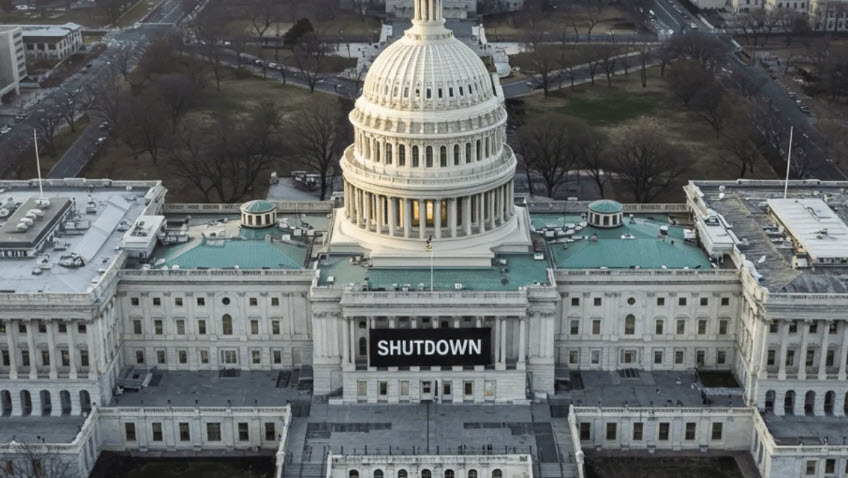
As the shutdown creeps into month two, I keep coming back to one question:
Why are Cook County families being put at risk because Washington, D.C. can’t do its job, especially when the programs we’re talking about are actually run here, at the state and local level?
This is exactly what we’re seeing right now with SNAP (food assistance) and WIC (for women, infants, and children). The money is federal, but the work, enrollment, cards, outreach, and clinics are all done by states and local agencies. And because Congress didn’t pass a spending plan, people in Chicago, Maywood, Oak Park, Austin, Cicero, and across Cook County are receiving messages that their November benefits may not be loaded.
That’s not just a budget problem. That’s a trust problem.
Washington’s shutdown, Chicago’s problem
When folks hear “government shutdown,” many think it’s abstract, like national parks closing. But for tens of thousands of people in Cook County, it’s not abstract at all. It’s:
Will the LINK card work on the 1st?
Will WIC still cover formula, cereal, and fruits/veggies?
Will that mom who’s already stretching every dollar suddenly be told, “Sorry, D.C. didn’t vote”?
That should never happen.
SNAP and WIC are the kind of programs that prevent bigger problems, such as hunger, kids going to school without breakfast, pregnant moms not getting good nutrition, and seniors choosing between groceries and meds. If we let those programs stall, everything else we say about “public safety” and “healthy communities” rings hollow.
Here’s the part nobody in D.C. likes to say out loud
These programs are administered by the states. Illinois runs them. Local offices in and around Chicago run them. Counties deal with the fallout. So if we can administer them locally, why are we 100% exposed to a fight in Congress?
My view is simple:
If the service is local, the backup should be local as well.
That doesn’t mean the federal government walks away. It means Illinois and Cook County should have:
A state-level nutrition continuity fund, so if D.C. shuts down, benefits don’t.
Authority to front the money temporarily and get reimbursed later.
Partnerships with food banks, park districts, schools, and churches are ready to activate in week 1 of a shutdown, not week 5.
Right now, when D.C. stalls, we just… wait. That’s not governance. That’s dependency.
Why I think states (and counties) should put real money into
People sometimes push back, saying, “But SNAP is a federal program.” True, but hunger is a local problem. A grocery store on Madison or North Ave doesn’t care whether the money is federal or state; they just see a parent trying to pay.
Here’s why I want more state and county skin in the game:
Closer to the problem = faster response. Springfield and Cook County can see when families are about to miss a month of benefits. Washington can, too but Washington is busy fighting.
We already do the work. Illinois verifies income, checks eligibility, and issues the cards. We should also be able to keep people fed when Congress is playing shutdown roulette.
Shutdowns shouldn’t starve people. I don’t care who you vote for, Republicans, Democrats, or Libertarians. We should agree that families shouldn’t go hungry because politicians can’t agree on a number on a spreadsheet.
This is what a local-first approach looks like
Here’s how I’d explain it to people in Austin, where I live:
The feds are usually the primary payer.
The state and county are the frontline operators.
During a shutdown, the payer pauses.
Right now, the frontline has no local bridge money to carry people through.
So, families, the people farthest from D.C., take the hit.
That’s backwards.
A better model for Cook County / Illinois during a federal shutdown:
Automatic trigger: If USDA says, “Next month’s SNAP/WIC funding is uncertain,” the state automatically activates a 30–60 day state bridge.
County supplement: Large counties like Cook can add emergency vouchers, transit-to-food-bank passes, or partner with the Chicago Food Depository to scale up distribution for the month.
Reimbursement: When the feds reopen, Illinois gets paid back.
Public clarity: Residents get one clear message: “Your benefits will continue. We will deal with Washington. You feed your kids.”
That’s how government should work.
Why this matters for the Cook County government
People sometimes ask, “You’re running to be Cook County Board President, isn’t this federal?” Yes and no.
Yes: SNAP and WIC are federal.
No: the impact is local, and county government absolutely has a role in making sure residents don’t fall through the cracks.
Cook County already touches public health, safety net hospitals, justice, and human services. Food insecurity connects to all of those. When families don’t eat, costs show up in ER visits, school attendance, and even crime. Keeping nutrition flowing is not charity, it’s smart local government.
So here’s my stance, for the record:
I support SNAP and WIC. I also support localizing the safety net so that a federal shutdown can’t turn off a family’s groceries. If Illinois and Cook County are doing the work, we should also have the power and a fund to keep people fed.
What we should be saying right now
If I were writing the public message to residents of Cook County today, while this shutdown is in month two, it would sound like this:
“Your family should not go hungry because Congress is in a standoff. We are working at the local level to protect benefits, expand food access, and keep WIC services running. If your benefits are delayed, contact your local office, and we will connect you to emergency food resources. This is not your fault. We will not let Washington’s dysfunction land on your children’s plates.”
That’s the tone we need, calm, direct, local.
Final thought
The shutdown exposed a weakness in how we fund anti-hunger programs. It’s not that SNAP and WIC are bad; they’re good programs. It’s because we built them on the assumption that Washington will always function. It doesn’t. So now it’s time for states, counties, and cities to protect their people.
If the program is administered locally, it should be protected locally as well. That’s the whole point of bringing government closer to the people.


