
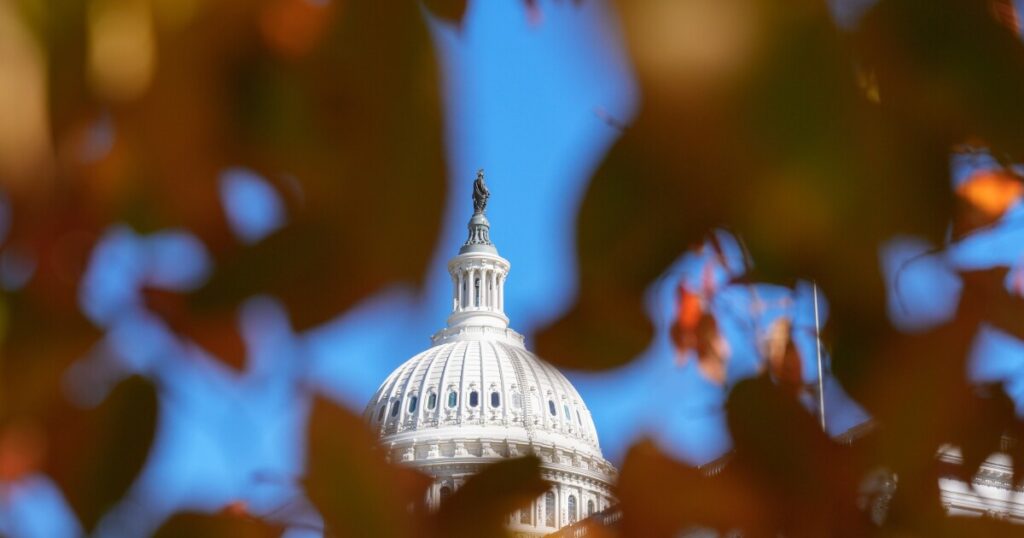
Forty days. That’s how long the federal government held itself hostage, grinding everyday operations to a halt, delaying paychecks, and threatening vital services, all to end up right back where it started. After six weeks of grandstanding, press conferences, and partisan finger-pointing, Washington produced what it always does: another temporary deal, another “continuing resolution,” and zero accountability.
This shutdown wasn’t about principle. It wasn’t about reform. It was a political staring contest between two parties that care more about scoring headlines than solving problems. Senate Democrats and Republicans both dug in, each claiming the moral high ground, and in the end, both sides caved to the same bloated status quo they claimed to be fighting.
No real spending cuts.
No meaningful reforms.
No shrinking of government power.
Just a promise to talk about the same issues again in January.
Meanwhile, federal workers went without pay, small businesses dependent on government contracts suffered, and millions of Americans were reminded that Washington can’t even do the one thing it’s supposed to do: keep its own lights on. The supposed “leaders” of both parties treated taxpayers like collateral damage in a political game.
From a libertarian perspective, this shutdown is proof that the problem isn’t which party is in charge; it’s the size and scope of government itself. When the federal government controls everything from healthcare to housing to education to energy, a budget fight in D.C. becomes a national crisis. The stakes are high not because government is essential, but because it has made itself indispensable.
The lesson of these forty days shouldn’t be “we need more compromise.” It should be that we need less government to hold us hostage in the first place. When power is decentralized, when local communities, private organizations, and individuals make their own decisions, Washington’s dysfunction loses its grip on our lives.
The 2025 shutdown didn’t expose new problems; it exposed the same old disease: dependency on an overgrown federal system that can’t manage its own checkbook. After forty days, nothing changed because neither party wants to change the system that keeps them powerful.
If Americans want real progress, it won’t come from another round of partisan negotiations behind closed doors. It will come from demanding smaller, smarter, limited government, the kind that can’t shut down the country just to make a point.


