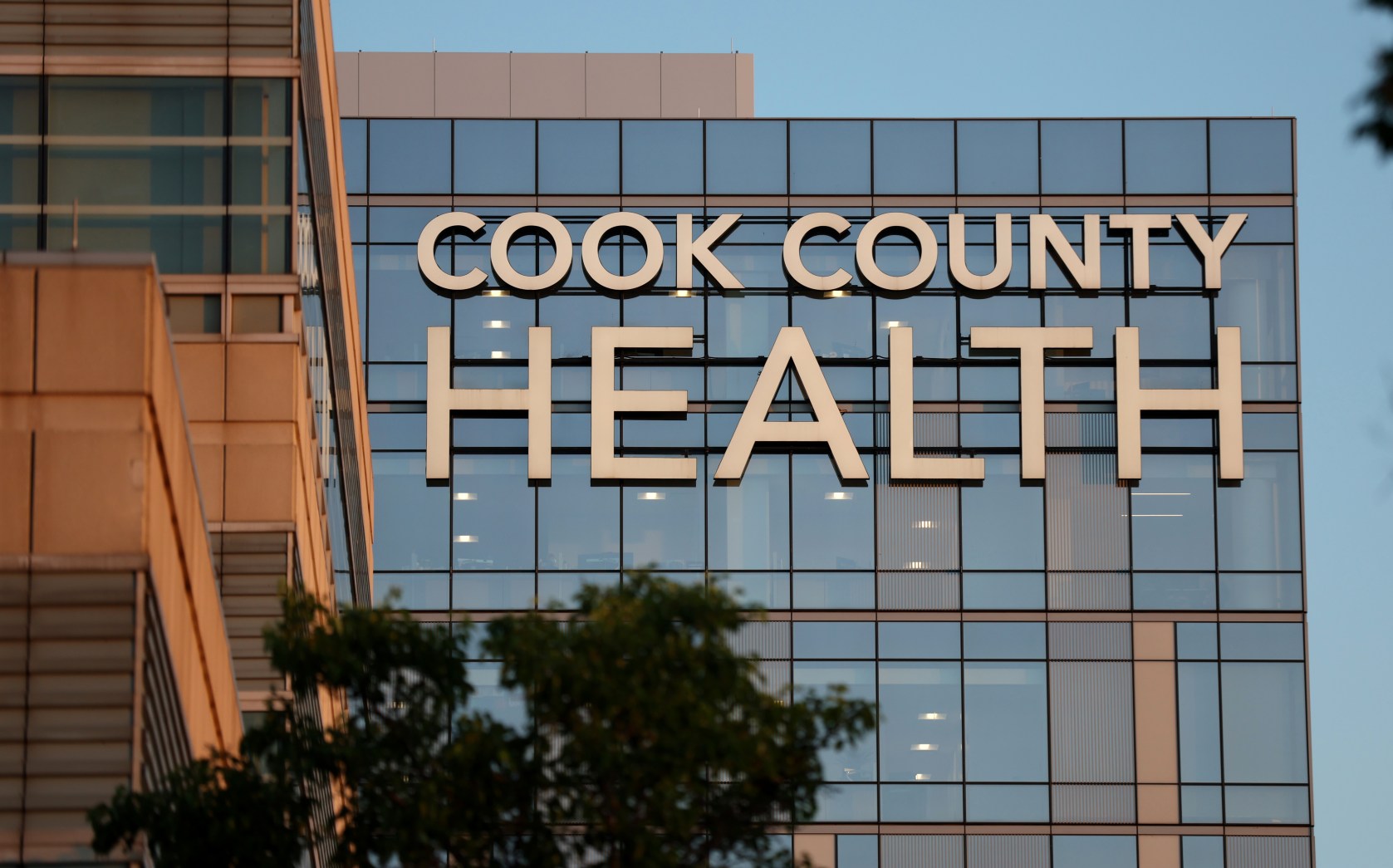
Cook County Health accounts for approximately half of Cook County’s $10 billion budget. It operates hospitals, clinics, and health programs that serve hundreds of thousands of residents. Yet much of its financial stability depends on healthcare funding decisions made outside Cook County.
With federal healthcare funding changing, Cook County is facing difficult financial decisions. The proposed 2027 budget attempts to address these challenges without raising taxes or laying off employees. However, the county is also using financial resources that may not be available in future years.
This raises a question that should have been part of Cook County’s long-term financial planning. Should Cook County Health have grown at a rate that allowed it to withstand significant changes in federal funding?
Half of Cook County’s Budget
Cook County’s adopted 2026 budget totaled approximately $10.12 billion. Of that amount, roughly $5.14 billion was allocated to the Health Fund. This means healthcare represents approximately half of the county’s overall financial operation. However, this does not mean half of Cook County property taxes fund healthcare. Cook County Health receives revenue from several sources, including Medicaid reimbursements, CountyCare, patient services, and county tax allocations. For 2027, Cook County Health proposed a $4.7 billion budget, approximately $439 million below its 2026 budget. The county’s proposed direct contribution would increase to $208 million, including an additional $40 million to address financial pressures. The distinction is important. Cook County operates an enormous healthcare system, but much of the money flowing through that system depends on federal and state healthcare policies. When an operation represents approximately half your budget, changes to its funding should be among your greatest financial planning concerns.Who Controls Cook County Health?
Cook County Health operates under a separate Board of Directors. In some ways, its relationship with Cook County resembles the relationship between Chicago Public Schools and the City of Chicago. Both operate major public services through governing boards, although their legal structures and funding arrangements differ. The Cook County Health Board is responsible for overseeing the healthcare system, its leadership, financial planning, and operations. Most board members are selected through an appointment process involving a nominating committee, the Cook County Board President, and the Cook County Board of Commissioners. The president selects nominees, and commissioners approve or reject those appointments. Appointed directors generally serve staggered four-year terms and may be reappointed. Vacancies are filled through the established appointment process. Directors may also be removed for cause under county rules, while the president has additional authority over the president’s direct appointee. This structure provides Cook County Health with operational oversight separate from daily county government. However, the system is not completely independent. County leadership retains important appointment, budget, and financial oversight responsibilities. Having a separate governing board does not eliminate the responsibility of elected county officials to ensure long-term financial sustainability. The governing board should be expected to identify financial risks, develop contingency plans, and explain how the system intends to manage future funding reductions. The County Board should be asking those same questions before approving budgets.The Federal Promise Was Never Guaranteed
The Affordable Care Act became law in 2010, expanding access to healthcare and federal Medicaid funding. Cook County Health benefited from the expansion, and CountyCare became an important part of its healthcare operations. However, the Affordable Care Act was controversial from the beginning. Political opposition, legal challenges, and congressional efforts to repeal or change the law have continued for years. Cook County could not have predicted the exact federal funding changes taking place today. Nor would it have been reasonable to expect the county to maintain enough reserves to replace every federal healthcare dollar indefinitely. But that is not the standard we should use to evaluate responsible government. The question is whether Cook County planned for the possibility that federal healthcare funding could decline significantly. If a substantial portion of an operation depends on federal policy, long-term financial planning should account for changes in that policy. This includes spending controls, financial reserves, contingency plans, and realistic projections of future revenue. Cook County Health should not have to operate as though federal funding is guaranteed to continue at the same level forever.Growing at a Sustainable Rate
Government programs often expand when additional revenue becomes available. More funding can support additional services, new programs, and greater access to healthcare. These investments can provide meaningful benefits to residents. However, expanding government services also creates financial commitments. Employees must be paid, facilities maintained, contracts honored, and programs supported year after year. When those commitments grow faster than reliable long-term revenue, government becomes increasingly vulnerable to outside financial changes. This is why Cook County should examine whether the growth of its healthcare operations was consistent with the financial risks associated with federal funding. That does not necessarily mean reducing healthcare services or turning away residents. It means establishing realistic spending priorities, improving operational efficiency, and maintaining sufficient financial flexibility to respond when funding changes. Responsible government should not measure success only by how much it spends or how many programs it creates. It should also measure whether those services can be sustained.The Cupboards Are Now Bare
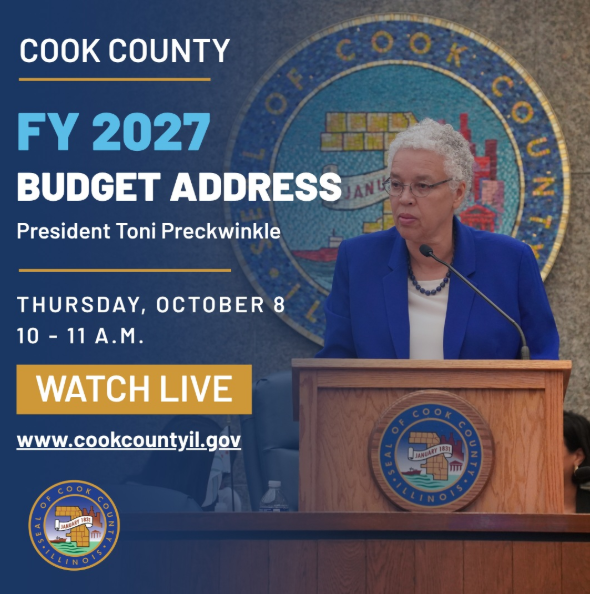
On October 7, 2026, Cook County Board President Toni Preckwinkle acknowledged the limitations of the county’s proposed budget solution. According to WTTW News, Preckwinkle stated: “We are sweeping the cupboards bare.” She explained that the county could use certain financial measures only once. After those resources are exhausted, additional revenue or other solutions will be necessary. The proposed 2027 budget closes an estimated $550 million countywide shortfall through spending reductions, higher-than-expected revenue, reserves, and other financial adjustments. Approximately $214 million of the original gap involved the Health Fund. Cook County deserves recognition for building reserves and finding ways to reduce expenses. Since 2024, Cook County Health reports eliminating approximately $314 million in expenses. The county has also improved pension funding and received credit rating upgrades. Those improvements matter. However, they do not eliminate the concern about what happens after the available one-time financial resources have been used. If balancing the 2027 budget requires exhausting certain available financial resources, what is the plan for 2028 and 2029? Financial reserves exist to help governments survive unexpected circumstances. But they should also provide time to make sustainable adjustments, rather than merely delay difficult decisions for another year.We Should Have Prepared for This Possibility
Federal healthcare funding has faced political uncertainty for more than a decade. The exact timing and scale of current reductions were not predictable, but the broader risk was well known. Cook County should have been evaluating how its healthcare system would operate under several federal funding scenarios. Those scenarios could have included smaller reimbursements, changes to Medicaid eligibility, or a significant increase in uninsured patients. Such planning would not eliminate the financial consequences of federal policy changes. However, it could identify potential problems earlier and establish clearer priorities before a budget emergency occurs. Some of that work has been underway. The county has documented expense reductions and financial planning efforts. The question is whether those efforts were sufficient for the scale and duration of the risks facing the healthcare system. Cook County Health now projects that charity care costs could reach approximately $485 million in 2027. More uninsured patients mean additional financial pressure on hospitals and clinics serving vulnerable residents. That is precisely why long-term preparation matters. Healthcare is not a service government can simply stop providing when a funding source changes. The residents who depend on Cook County Health should not be the ones left dealing with the consequences of inadequate financial planning.The County Board Must Address the Years Ahead
The Cook County Board of Commissioners has an important responsibility beyond approving the next annual budget. Commissioners must examine whether the county’s financial decisions are sustainable over multiple years. That includes asking Cook County Health leadership difficult questions about spending, staffing, contracts, reserves, and future federal funding scenarios. What level of financial reserves should the healthcare system maintain? Which costs are temporary, and which represent long-term obligations? What changes can be made without compromising essential patient services? Most importantly, what happens if federal funding continues to decline while demand for county healthcare services increases? These questions should be addressed openly, with financial projections that residents and commissioners can understand. The County Board should also establish measurable expectations for the Cook County Health Board. A separate governing body should provide independent oversight, but that independence must come with accountability for long-term results. Balancing the current budget is necessary. Making sure future budgets can also be balanced is just as important.A Budget That Can Survive Change
Cook County cannot control Congress, the president, or future federal healthcare funding decisions. It cannot reasonably prepare for the complete elimination of every federal funding source. However, it can control how it evaluates risk, manages spending, builds reserves, and prepares for changes beyond its control. The 2027 budget demonstrates that Cook County has financial resources available to respond to a difficult year. It also demonstrates that some of those resources cannot be relied upon repeatedly. We should acknowledge the work already done to strengthen county finances while still questioning whether more could have been done to prepare Cook County Health for significant federal changes. The goal should not be to eliminate healthcare programs simply because federal funding is uncertain. It should be to operate those programs responsibly, with clear financial priorities and realistic expectations. Cook County should grow its healthcare operations at a rate it can sustain, maintain reserves for difficult periods, and plan for major changes in federal funding before those changes become emergencies. The cupboards may be bare after the 2027 budget. That makes the question of what happens next even more important. Cook County residents deserve more than a balanced budget for one year. They deserve a county government prepared for the years that follow. Cook County Health accounts for approximately half of Cook County’s $10 billion budget. It operates hospitals, clinics, and health programs that serve hundreds of thousands of residents. Yet much of its financial stability depends on healthcare funding decisions made outside Cook County. With federal healthcare funding changing, Cook County is facing difficult financial decisions. The proposed 2027 budget attempts to address these challenges without raising taxes or laying off employees. However, the county is also using financial resources that may not be available in future years. This raises a question that should have been part of Cook County’s long-term financial planning. Should Cook County Health have grown at a rate that allowed it to withstand significant changes in federal funding?Half of Cook County’s Budget
Cook County’s adopted 2026 budget totaled approximately $10.12 billion. Of that amount, roughly $5.14 billion was allocated to the Health Fund. This means healthcare represents approximately half of the county’s overall financial operation. However, this does not mean half of Cook County property taxes fund healthcare. Cook County Health receives revenue from several sources, including Medicaid reimbursements, CountyCare, patient services, and county tax allocations. For 2027, Cook County Health proposed a $4.7 billion budget, approximately $439 million below its 2026 budget. The county’s proposed direct contribution would increase to $208 million, including an additional $40 million to address financial pressures. The distinction is important. Cook County operates an enormous healthcare system, but much of the money flowing through that system depends on federal and state healthcare policies. When an operation represents approximately half your budget, changes to its funding should be among your greatest financial planning concerns.Who Controls Cook County Health?
Cook County Health operates under a separate Board of Directors. In some ways, its relationship with Cook County resembles the relationship between Chicago Public Schools and the City of Chicago. Both operate major public services through governing boards, although their legal structures and funding arrangements differ. The Cook County Health Board is responsible for overseeing the healthcare system, its leadership, financial planning, and operations. Most board members are selected through an appointment process involving a nominating committee, the Cook County Board President, and the Cook County Board of Commissioners. The president selects nominees, and commissioners approve or reject those appointments. Appointed directors generally serve staggered four-year terms and may be reappointed. Vacancies are filled through the established appointment process. Directors may also be removed for cause under county rules, while the president has additional authority over the president’s direct appointee. This structure provides Cook County Health with operational oversight separate from daily county government. However, the system is not completely independent. County leadership retains important appointment, budget, and financial oversight responsibilities. Having a separate governing board does not eliminate the responsibility of elected county officials to ensure long-term financial sustainability. The governing board should be expected to identify financial risks, develop contingency plans, and explain how the system intends to manage future funding reductions. The County Board should be asking those same questions before approving budgets.The Federal Promise Was Never Guaranteed
The Affordable Care Act became law in 2010, expanding access to healthcare and federal Medicaid funding. Cook County Health benefited from the expansion, and CountyCare became an important part of its healthcare operations. However, the Affordable Care Act was controversial from the beginning. Political opposition, legal challenges, and congressional efforts to repeal or change the law have continued for years. Cook County could not have predicted the exact federal funding changes taking place today. Nor would it have been reasonable to expect the county to maintain enough reserves to replace every federal healthcare dollar indefinitely. But that is not the standard we should use to evaluate responsible government. The question is whether Cook County planned for the possibility that federal healthcare funding could decline significantly. If a substantial portion of an operation depends on federal policy, long-term financial planning should account for changes in that policy. This includes spending controls, financial reserves, contingency plans, and realistic projections of future revenue. Cook County Health should not have to operate as though federal funding is guaranteed to continue at the same level forever.Growing at a Sustainable Rate
Government programs often expand when additional revenue becomes available. More funding can support additional services, new programs, and greater access to healthcare. These investments can provide meaningful benefits to residents. However, expanding government services also creates financial commitments. Employees must be paid, facilities maintained, contracts honored, and programs supported year after year. When those commitments grow faster than reliable long-term revenue, government becomes increasingly vulnerable to outside financial changes. This is why Cook County should examine whether the growth of its healthcare operations was consistent with the financial risks associated with federal funding. That does not necessarily mean reducing healthcare services or turning away residents. It means establishing realistic spending priorities, improving operational efficiency, and maintaining sufficient financial flexibility to respond when funding changes. Responsible government should not measure success only by how much it spends or how many programs it creates. It should also measure whether those services can be sustained.The Cupboards Are Now Bare
On October 7, 2026, Cook County Board President Toni Preckwinkle acknowledged the limitations of the county’s proposed budget solution. According to WTTW News, Preckwinkle stated:“We are sweeping the cupboards bare.”She explained that the county could use certain financial measures only once. After those resources are exhausted, additional revenue or other solutions will be necessary. The proposed 2027 budget closes an estimated $550 million countywide shortfall through spending reductions, higher-than-expected revenue, reserves, and other financial adjustments. Approximately $214 million of the original gap involved the Health Fund. Cook County deserves recognition for building reserves and finding ways to reduce expenses. Since 2024, Cook County Health reports eliminating approximately $314 million in expenses. The county has also improved pension funding and received credit rating upgrades. Those improvements matter. However, they do not eliminate the concern about what happens after the available one-time financial resources have been used. If balancing the 2027 budget requires exhausting certain available financial resources, what is the plan for 2028 and 2029? Financial reserves exist to help governments survive unexpected circumstances. But they should also provide time to make sustainable adjustments, rather than merely delay difficult decisions for another year.