Cook County residents deserve to know who influences the people negotiating with their tax dollars.
A recent Chicago Sun-Times investigation raises serious questions about that relationship under Cook County Board President Toni Preckwinkle.
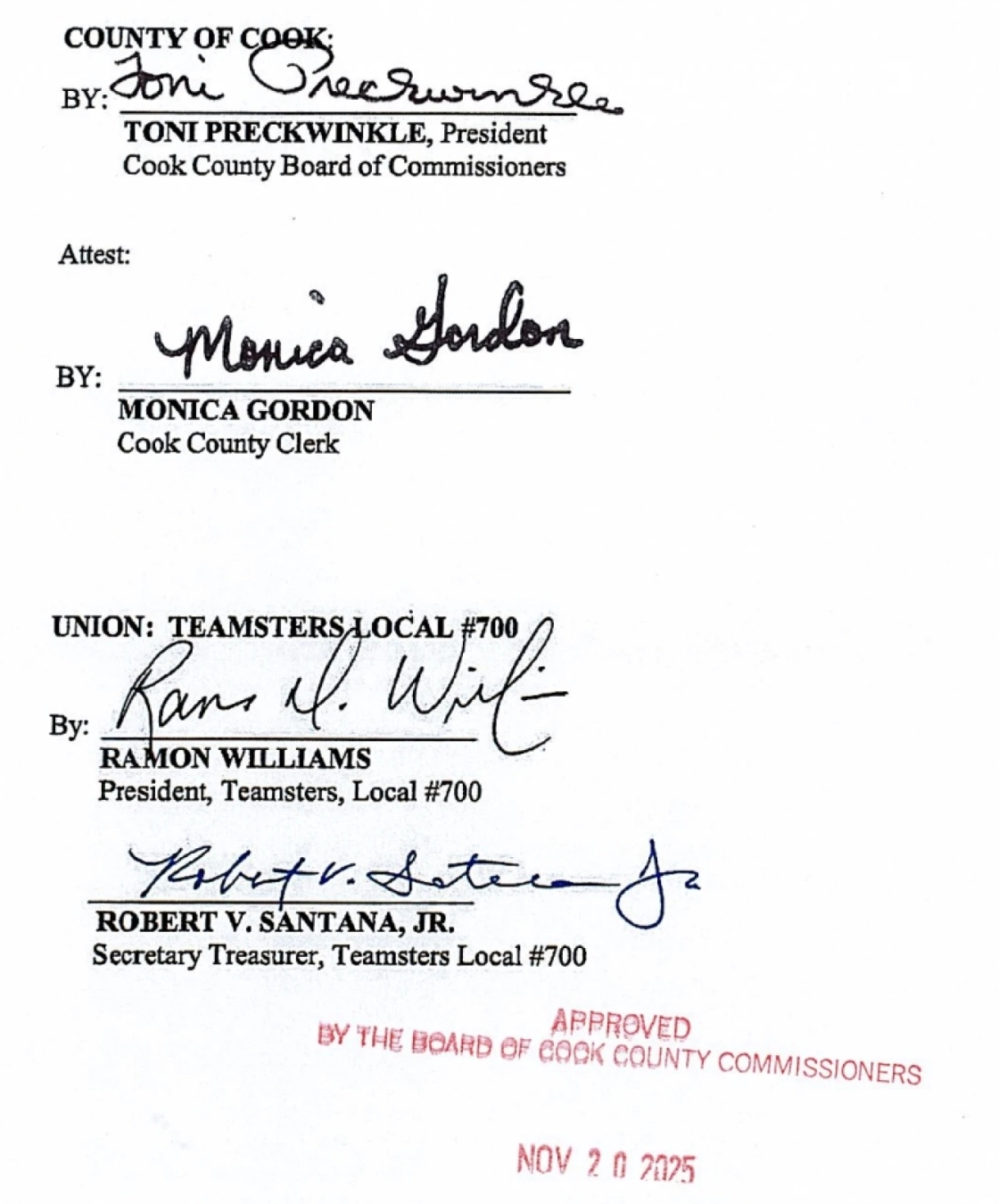
The Sun-Times reported that labor unions representing county employees have contributed substantial amounts to Preckwinkle’s political campaigns. Some contributions were made while her administration or county agencies were involved in active contract negotiations with those unions.
Read the Chicago Sun-Times investigation
The contributions are legal under current Cook County ethics rules. That does not mean residents should ignore the potential conflict of interest.
Teamsters Contributions During Negotiations
According to the Sun-Times, contract negotiations between Teamsters Local 700 and the Cook County Forest Preserve District began in May 2025.
Local 700 contributed $5,000 to Preckwinkle’s campaign on May 29, 2025.
Additional negotiations involving county employees represented by Local 700 began the following month.
The union later contributed $2,500 in October 2025 and $10,000 on March 17, 2026.
The March contribution was reportedly Local 700’s largest contribution to Preckwinkle’s campaign in a decade.
The Sun-Times reports that Local 700 has contributed more than $100,000 to Preckwinkle’s campaign since 2010.
Teamsters organizations collectively have contributed more than $300,000 to Preckwinkle for President during that period.
The Issue Is Bigger Than One Union
Teamsters organizations are not the only labor groups contributing to Preckwinkle.
The Sun-Times reported that the Service Employees International Union has contributed roughly $5 million to Preckwinkle’s campaigns since her first campaign for County Board President.
Some of that money supported her unsuccessful campaign for Chicago mayor.
Operating Engineers Local 399, which also has a county labor contract, contributed $25,000 to Preckwinkle for President earlier this year.
These organizations have every right to participate in the political process.
Workers also have every right to organize and collectively bargain.
The problem is what happens when campaign fundraising and government negotiations overlap.
Legal Does Not Always Mean Good Government
Cook County’s ethics rules currently allow these contributions.
Preckwinkle’s office has defended the arrangement.
Her spokesperson told the Sun-Times that Preckwinkle does not personally sit at the bargaining table.
The spokesperson also said labor support reflects shared values rather than a quid pro quo.
County contracts ultimately go before the Cook County Board for approval.
Those facts matter.
But taxpayers should not have to prove a quid pro quo before asking whether the system creates an appearance of improper influence.
The County Board President oversees an administration that plays a significant role in labor negotiations.
Those agreements determine compensation, benefits, working conditions, and ultimately taxpayer costs.
When organizations involved in those negotiations can simultaneously contribute thousands of dollars to the County Board President’s campaign, residents have a legitimate reason to ask questions.
Cook County Needs Stronger Transparency
This issue is not about attacking unions or county employees.
It is about establishing clear boundaries between government decisions and campaign fundraising.
Cook County should consider stronger disclosure requirements surrounding campaign contributions from organizations actively negotiating contracts with county government.
Residents should be able to easily see when a political contribution comes from an organization with business or negotiations pending before the county.
Major contributions made during active negotiations should receive greater public scrutiny.
Government decisions should be made based on what is fair to employees, taxpayers, and residents.
They should not be influenced by who contributes to a political campaign.
After nearly sixteen years under the same County Board President, Cook County residents should expect stronger safeguards against even the appearance of conflicts of interest.
Transparency should not begin after questions are raised.
It should be built into the system from the beginning.